Belton's Septic Tank ServiceRaeford, North Carolina
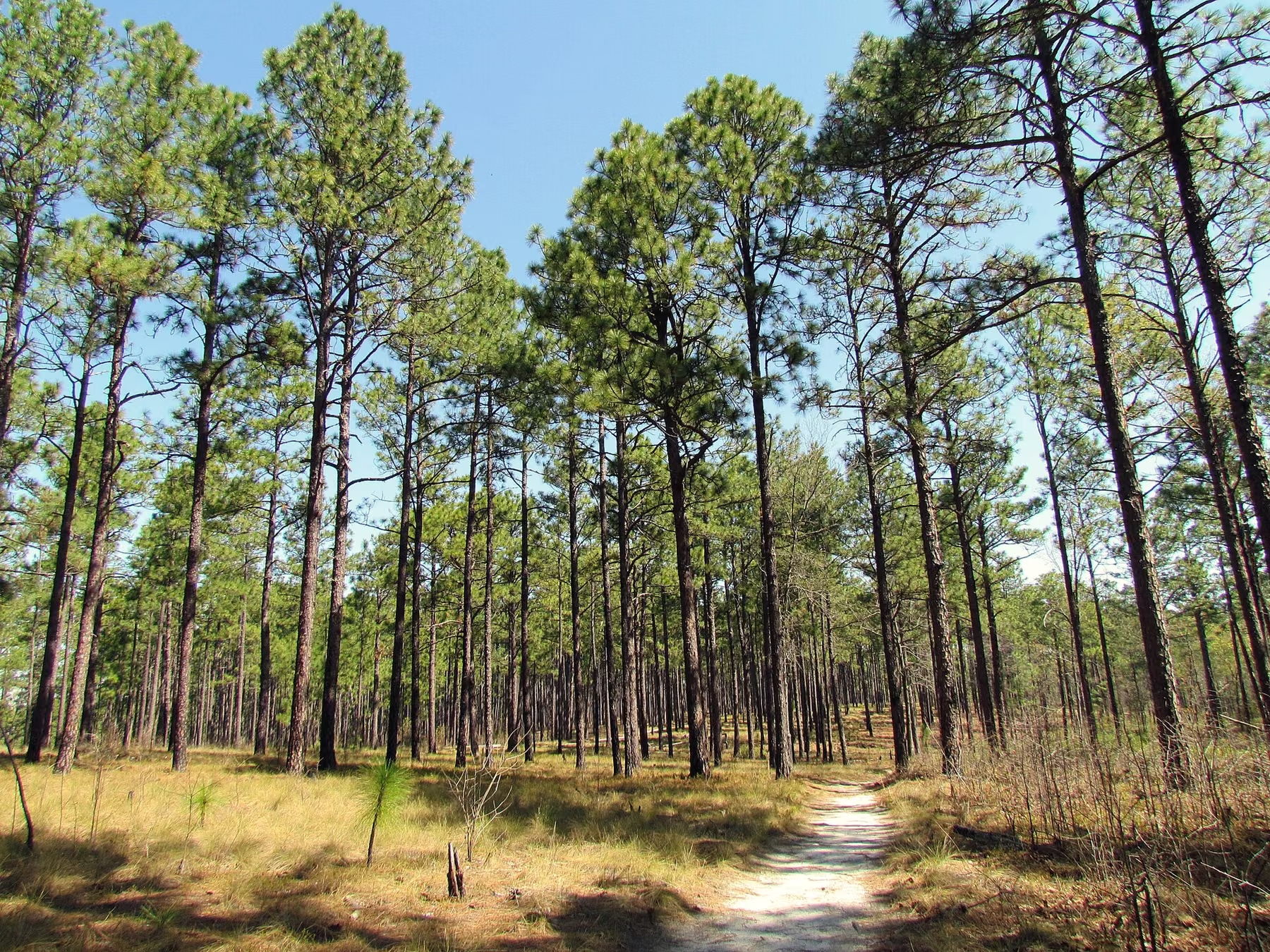
Tall longleaf pines over a sandy footpath, pine straw on the ground

Septic pumping and repair, Raeford NC

Slow drains, a wet spot in the yard, or a house closing on septic. Call and tell us what you're seeing.

(910) 425-8876

Longleaf pine at Weymouth Woods, Southern Pines.

What brings most people to call

Most calls start with one of three things. Here is what each usually means, and what helps to say when you ring.

Two green septic access lids and a white cleanout pipe in a sloped lawn
Access lids and a cleanout in a lawn. The tank sits just below.

Drains are slow or gurgling

When every drain in the house is slow, the tank is often full. One slow sink is usually a plumbing clog, not the septic.

Tell us: which drains, how long, and when the tank was last pumped.

An open trench in pale sandy soil with drain field pipe laid in the bottom
Drain field line going into a trench of sandy soil.

The yard is soggy or smells

A wet patch or extra-green grass over the drain field can mean water is not soaking away. Keep kids, pets and vehicles off it.

Tell us: where the wet spot is, and whether it follows rain or laundry day.

A white wooden farmhouse with a deep front porch under pine trees
The Malcolm Blue farmhouse in Aberdeen, a Sandhills landmark.

You're buying a house on septic

A septic inspection before closing tells you what you are taking on. Many buyers book one alongside the home inspection.

Tell us: the address, the closing date, and who should get the results.

Pumping keeps the drain field alive

Solids settle in the tank. If they build up too far, they wash out into the drain field and clog the soil. Replacing a field costs far more than a pump-out.

Three septic tank risers standing in freshly graded sand and gravel at the edge of woods
Risers bring the tank openings up to the surface, so the lids can be found and opened without digging.
Inside a concrete septic tank, showing the baffle openings and stained walls
Inside a tank: the wall openings let liquid move on while solids stay behind.
Looking down into a round tank opening with an orange outlet fitting
An outlet opening, seen from the lid.

How often

EPA guidance for a typical household is a pump-out every three to five years. A bigger family, a garbage disposal or a small tank shortens that.

If you don't know when it was last done, that is a good reason to call.

A green vacuum tanker truck discharging through a hose at a treatment yard
A vacuum truck emptying its load. Stock photo, not one of our trucks.

Find your lid before we come

Knowing where the lid is saves time on the day. These are the kinds of lids to look for.

A round green plastic septic lid set flush in a lawn
Green plastic riser lid, flush with the grass.
Three round concrete lids in a row in a grassy bank
Concrete lids in a line over a two-part tank.
A single round concrete lid with a steel lifting handle in grass
Concrete lid with a lifting loop.
Two square concrete tank covers at ground level
Square concrete covers, common on older tanks.

Start at the house. Find where the sewer pipe leaves the foundation, then walk straight out. Tanks are often 10 to 25 feet away.

Check the paperwork. The county health department may hold a permit drawing for your system. Closing papers sometimes include one.

Mark it. If you find it, put a flag or a stake by it. Clear pine straw and anything parked on top.

Repairs when something has failed

Lids crack, pipes break and lines get crushed by trucks or tree roots. Call and describe what you see. If it needs digging, we will say so before we start.

A backhoe bucket over a muddy trench beside a building, with exposed pipe
Digging down to a damaged line.
An excavator and dump truck working on a trench in front of a white house
Bigger repairs can mean a machine in the front yard.

Sandhills ground drains fast

Deep sand soaks water up quickly. That helps a drain field, but it also means a failing system can reach groundwater sooner. On rural lots with wells, that matters.

Open longleaf pine forest with a carpet of rust-colored pine needles
Pine straw and sand under longleaf at Weymouth Woods.
Close view of the plated bark of a longleaf pine trunk
Pine roots go looking for water. Keep big trees off the lines.
Looking straight up through the crowns of tall longleaf pines into blue sky
Longleaf crowns at Weymouth Woods.
Longleaf pines in early morning mist over green undergrowth
Morning in the Carolina Sandhills refuge, just over the state line.

A few habits that help

Don't drive or park on the tank or the field. Spread laundry over the week. Keep grease, wipes and paint out of the drains.

Sunlit longleaf pine woods with green wiregrass and young growth on sandy ground
Upland longleaf woods at Weymouth Woods.

Based in Raeford, Hoke County

We work out of Raeford. [Service area to be confirmed by owner.] If you are not sure we come out your way, call and ask.

Brick commercial buildings at a corner in downtown Raeford under a clear sky
Downtown Raeford.
A green soybean field with a line of pine woods beyond
A soybean field between Raeford and Fayetteville.
Route signs for NC 73 East and NC 211 West beside a two-lane road
NC 73 and NC 211 at West End, in Moore County.
Dark river water reflecting cypress and hardwood trees
The Lumber River. It begins as Drowning Creek on the western edge of Hoke County.

Call Belton's

The phone is the fastest way to reach us.

(910) 425-8876
Fax
(910) 425-1497
Hours
[Hours to be confirmed]
Address
[Street address], Raeford, NC [ZIP]
Services
Septic pumping, inspections, repairs

For a home sale, send the fax or form with the address and closing date.

Send a request

Call (910) 425-8876 Request